

Laser Therapy for Dog Muscle Injuries
Laser therapy is a gentle, non-invasive option that may help support recovery, comfort, and movement in dogs with muscle injuries. It is commonly used as part of a broader support plan for strains, soreness, tightness, and soft tissue irritation.
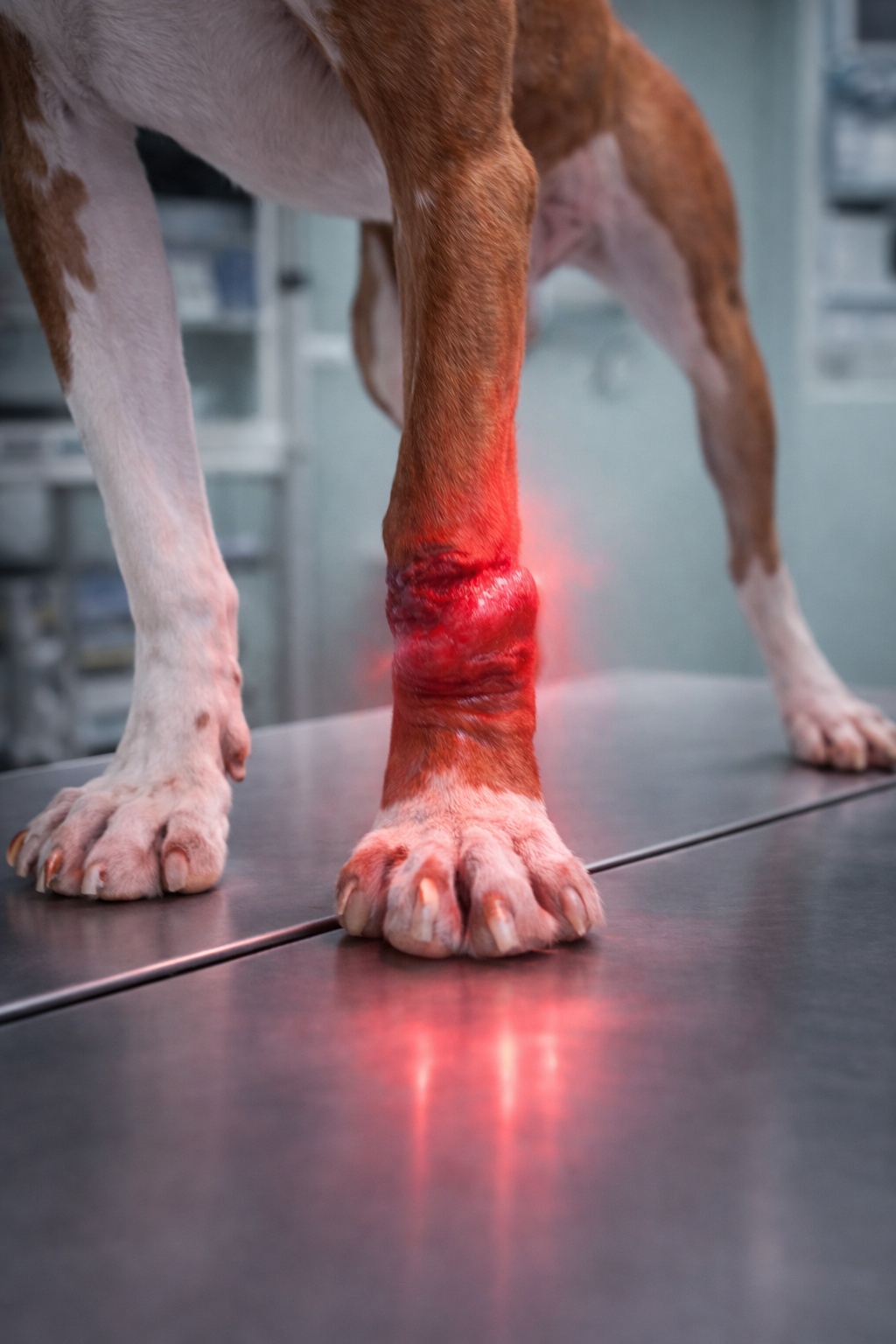
What Are Muscle Injuries in Dogs?
Muscle injuries in dogs can happen after overexertion, running, jumping, slipping, twisting, rough play, sports activity, or sudden movements. Some injuries are mild, like a simple strain, while others involve deeper muscle irritation or overload.
Dogs with muscle injuries may show stiffness, limping, reduced activity, soreness in one area, or hesitation when walking, turning, or standing up.
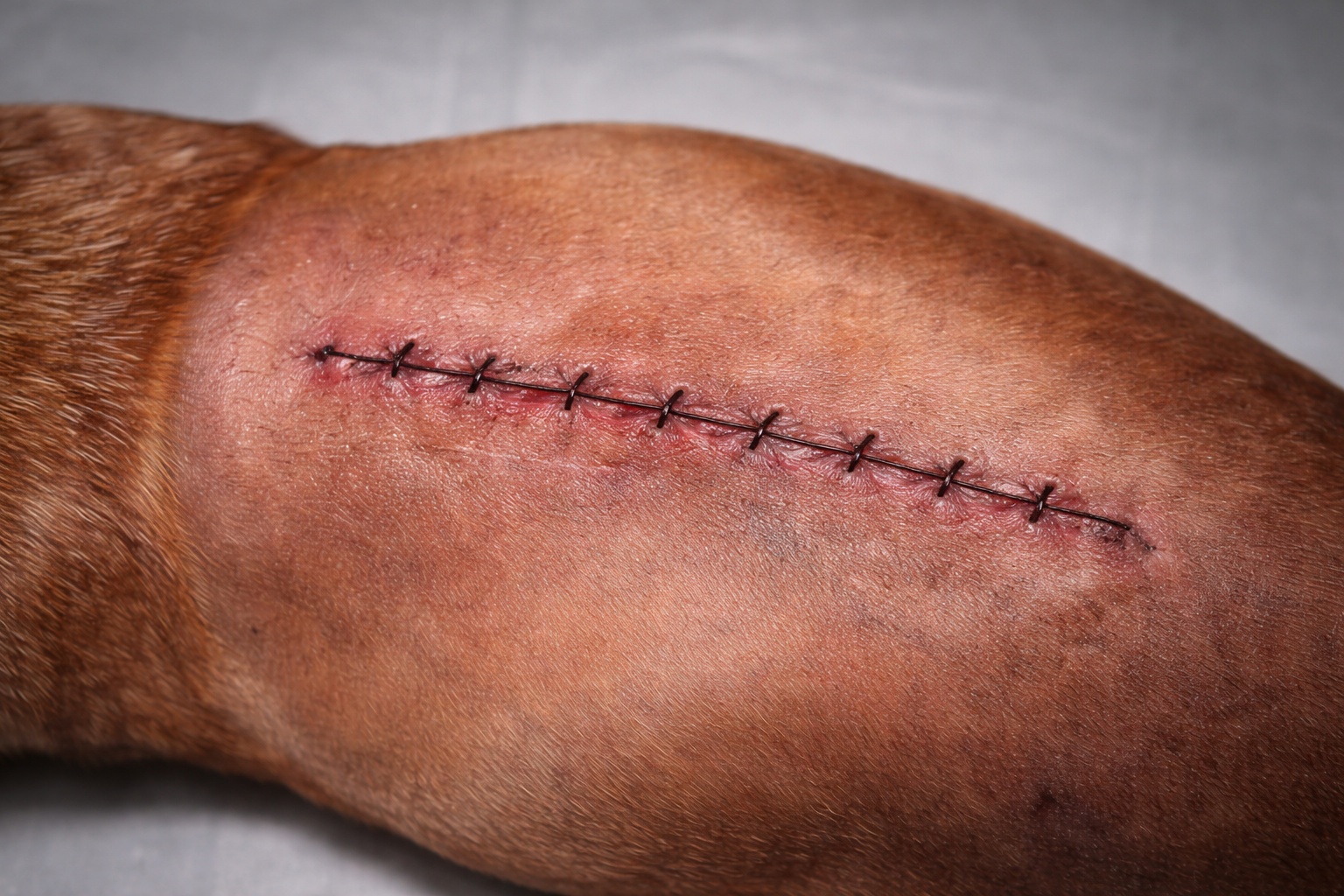
Common Signs
- Limping or favoring one leg
- Muscle soreness or tenderness
- Stiffness after activity or rest
- Reluctance to run, jump, or play
- Reduced range of movement
- Slower walking or unusual gait
Dogs More at Risk
- Very active dogs
- Sporting and working dogs
- Dogs returning to activity too quickly
- Senior dogs with weaker soft tissues
- Dogs that slip on hard floors
- Dogs with poor conditioning or extra weight
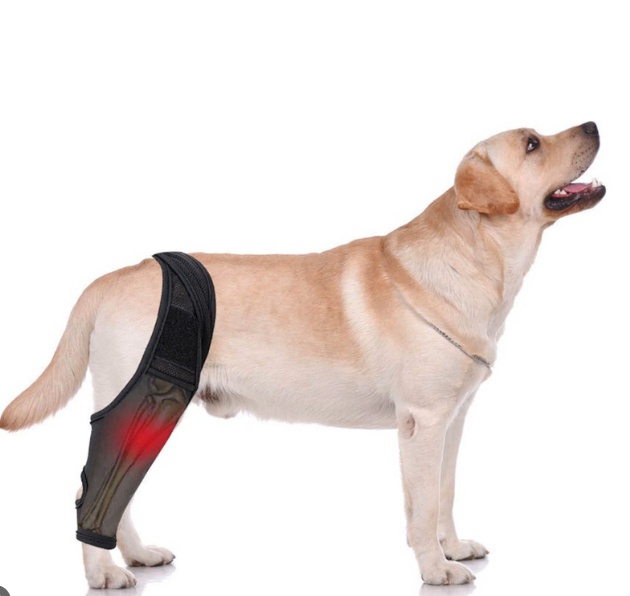
How Laser Therapy Works for Muscle Injuries
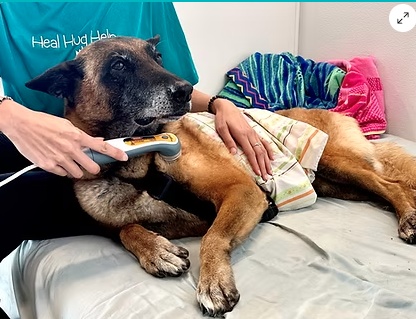
Laser therapy delivers therapeutic light to the target area around the injured or overworked muscle. It is commonly used in rehabilitation and supportive care to help encourage circulation and a healthy tissue response in the treated area.
- Targets sore or overworked muscle tissue
- Often used around the shoulders, thighs, hips, or back
- May help support comfort and flexibility
- Can be used as part of a recovery support routine
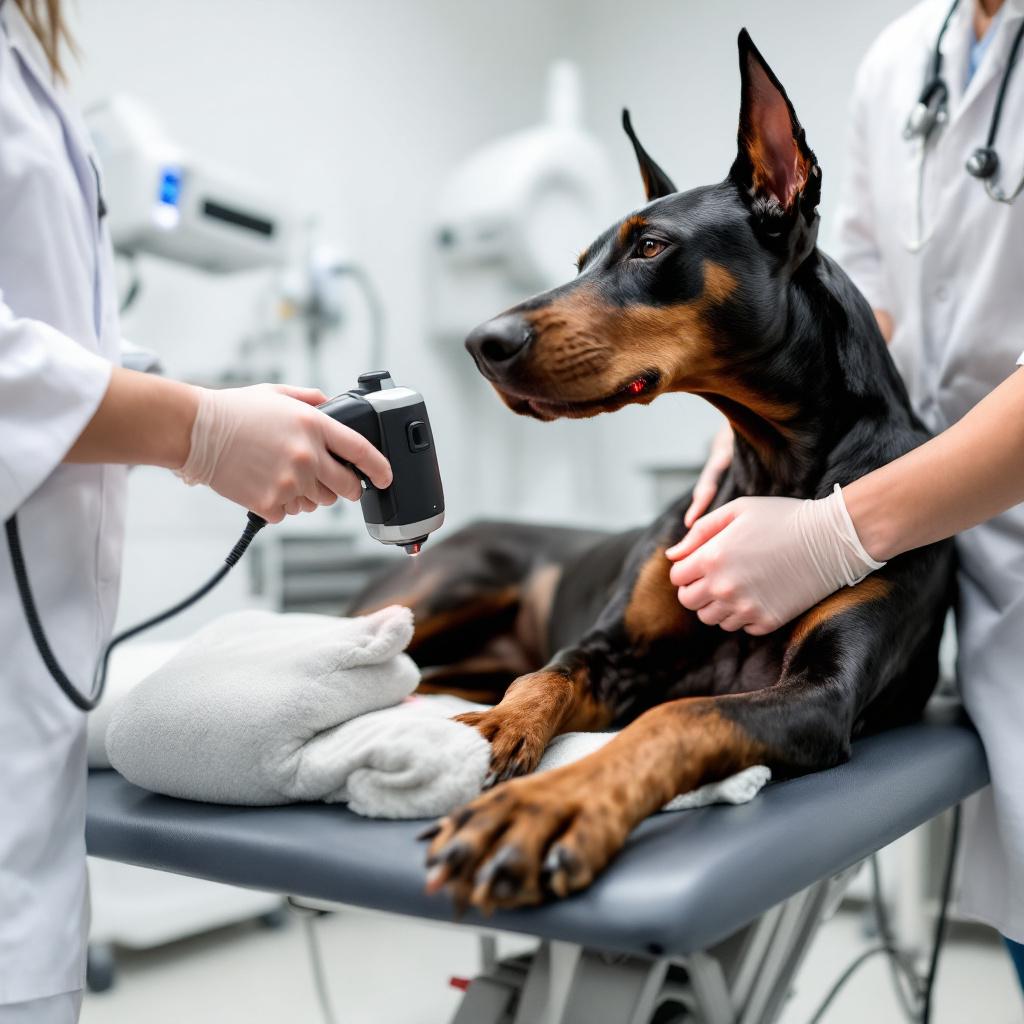
Potential Benefits of Laser Therapy for Dog Muscle Injuries
Muscle Comfort
Laser therapy may help support temporary relief from soreness, tightness, and soft tissue discomfort.
Recovery Support
Many owners use it to help support a gradual return to easier movement and better flexibility.
Simple Home Routine
At-home sessions can be easy to include alongside rest, controlled activity, and veterinary guidance.

How to Use Laser Therapy for a Dog With a Muscle Injury
- Let your dog settle down. Choose a calm position where the sore area is easy to reach.
- Turn on the device. Set the timer and intensity according to your product instructions.
- Place over the target area. Hold it gently over the injured or tight muscle area.
- Keep the session steady. Slow, consistent treatment is usually best.
- Repeat regularly. Ongoing sessions are often used as part of a recovery support routine.
Avoid the eyes and use protective glasses for the person operating the device. If your dog reacts strongly to touch, consult a veterinarian before continuing treatment.


Helpful Home Support Tips
Allow Proper Rest
Reducing intense activity for a while can help prevent the injury from getting worse.
Reintroduce Activity Gradually
Gentle controlled movement is often better than a sudden return to running or rough play.
Use Safe Surfaces
Non-slip floors and good footing can help reduce strain on healing muscles.
When to Speak With a Veterinarian
Speak with your veterinarian if your dog has severe pain, swelling, sudden limping, cannot bear weight, cries out when moving, or shows no improvement. A proper diagnosis is important to rule out ligament, tendon, joint, or bone injury.
Frequently Asked Questions
Can laser therapy help dog muscle injuries?
It is commonly used as a supportive option for dogs with muscle soreness, strains, tightness, and mobility issues as part of a broader care plan.
Can laser therapy cure a muscle injury?
The cause and severity of a muscle injury can vary. Laser therapy is not usually described as a cure, but it may help support comfort and recovery.
How often should I use laser therapy for dog muscle injuries?
Frequency can vary depending on the dog and the injury. Many owners use it several times per week as part of a recovery routine.
Where should I place the laser device for muscle injuries?
It is usually placed over the sore or affected muscle area. Avoid the eyes and follow the product instructions carefully.
Can laser therapy be used with other treatments?
In many cases, yes. It is often used alongside rest, controlled exercise, rehabilitation, and other veterinarian-recommended care.
Support Your Dog’s Muscle Recovery at Home
Discover a simple and non-invasive way to support dogs dealing with muscle injuries, soreness, stiffness, and reduced mobility.
Disclaimer: This content is for general informational purposes only and is not a substitute for professional veterinary advice, diagnosis, or treatment. Always consult your veterinarian before starting laser therapy or changing your dog’s care plan.
